
A few years ago, the idea of seeing a doctor through a phone or computer screen seemed unusual to many people. Today, virtual healthcare has become a routine part of medical care for millions of patients. Yet one question continues to come up: is online urgent care safe?
It’s an important question. When you’re seeking medical advice, treatment recommendations, or prescription support, you want to know that the care you’re receiving is both safe and reliable. The good news is that legitimate telehealth services are built around strict medical, legal, and privacy standards designed to protect patients.
Let’s take a closer look at how online urgent care works and the safeguards that help ensure quality care.
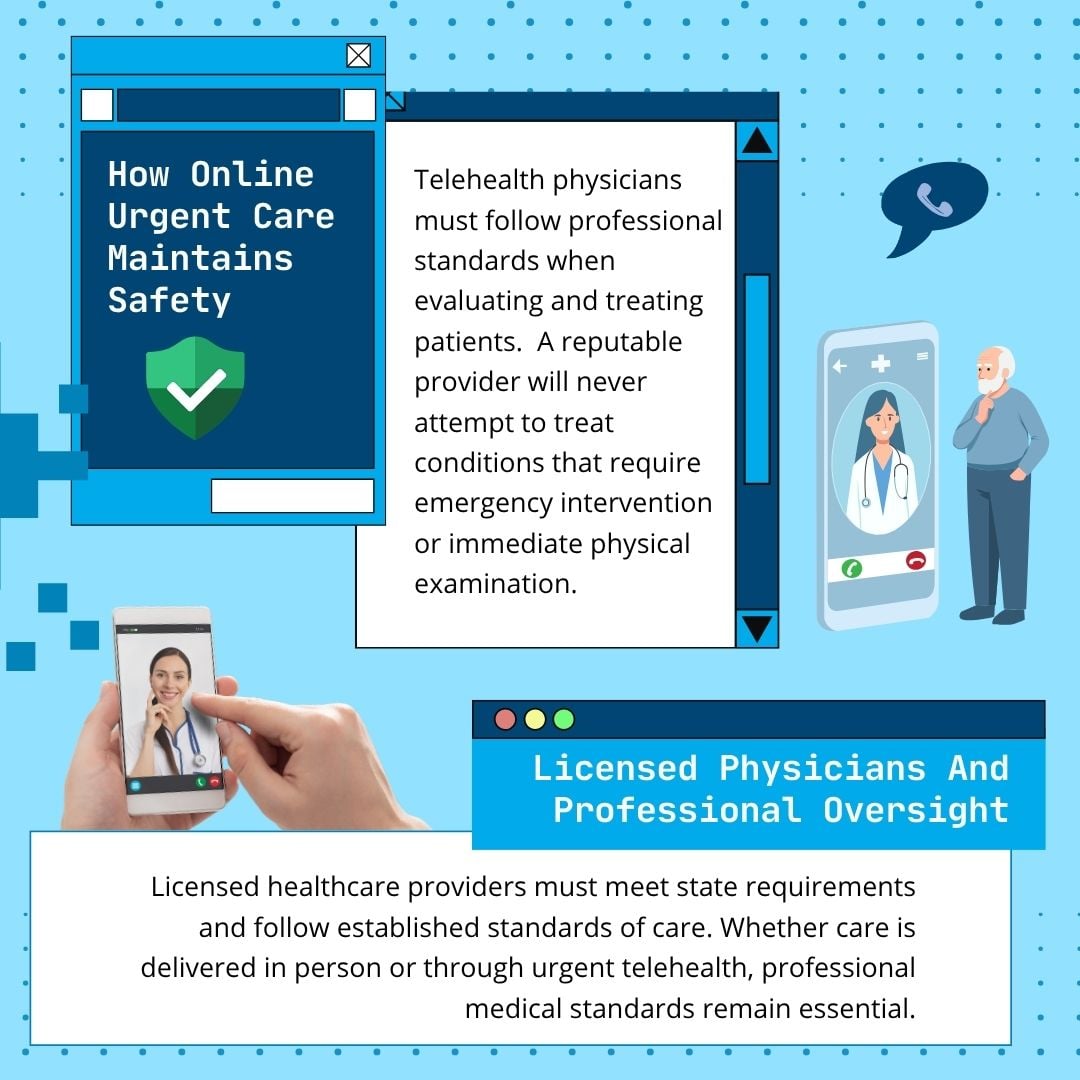
How Online Urgent Care Maintains Safety
Just like traditional healthcare providers, telehealth physicians must follow professional standards when evaluating and treating patients.
During a virtual consultation, providers gather information about:
- Current symptoms
- Medical history
- Existing conditions
- Medications
- Allergies
- Treatment goals
Based on this assessment, the provider determines whether the condition can be managed virtually or whether an in-person evaluation is necessary.
A reputable virtual urgent care provider will never attempt to treat conditions that require emergency intervention or immediate physical examination.
Licensed Physicians and Professional Oversight
One of the most important safety factors in telehealth is physician licensing. Licensed healthcare providers must meet state requirements and follow established standards of care.
Patients should verify that the provider:
- Is properly licensed
- Works through a legitimate healthcare practice
- Conducts real medical evaluations
- Follows applicable telehealth regulations
Whether care is delivered in person or through urgent telehealth, professional medical standards remain essential.
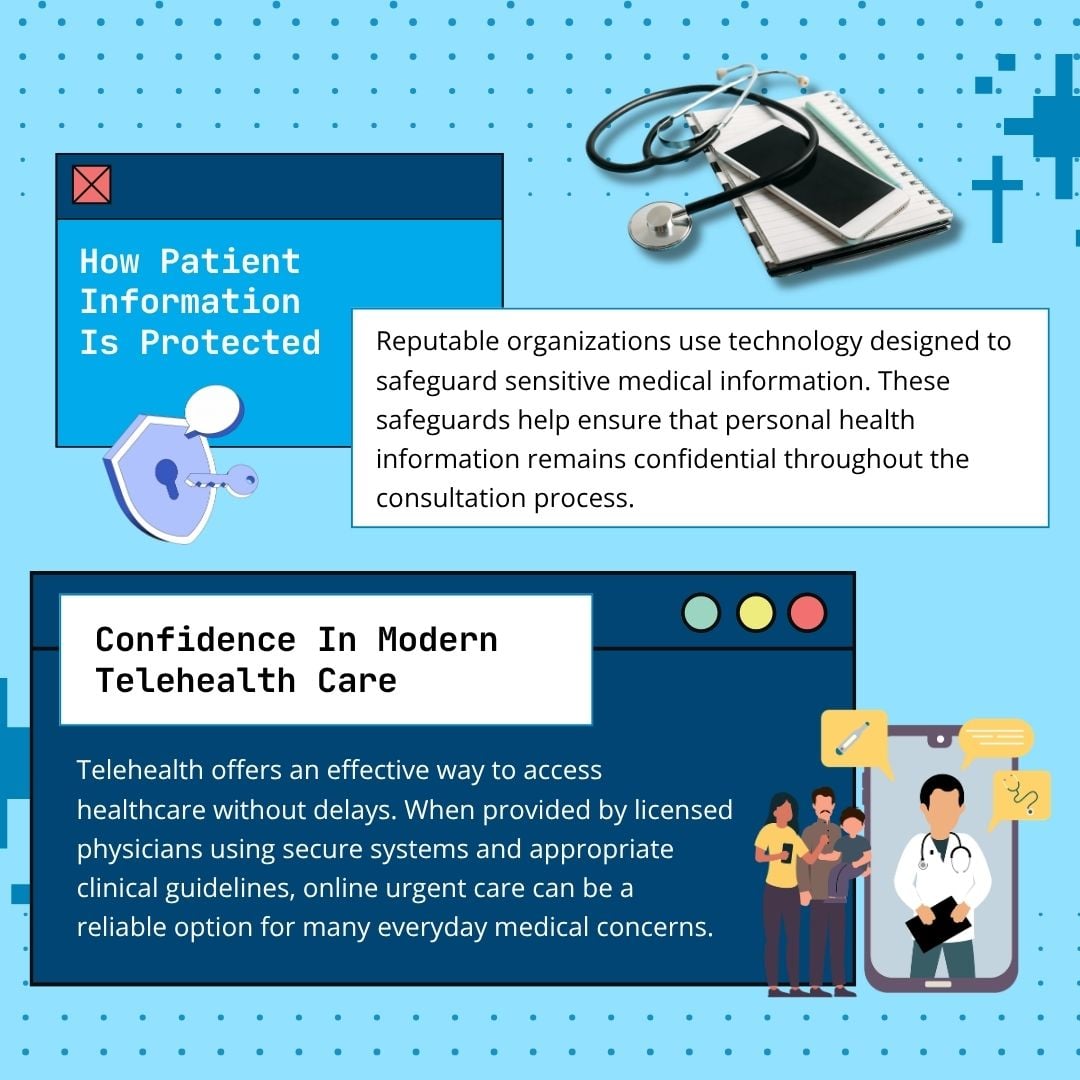
How Patient Information Is Protected
Privacy is another common concern among telehealth users. Reputable healthcare organizations use secure technology designed to safeguard sensitive medical information.
Patient protection measures often include:
- Encrypted communications
- Secure patient portals
- Restricted access to records
- HIPAA-compliant systems
- Authentication procedures
These safeguards help ensure that personal health information remains confidential throughout the consultation process.
When Online Urgent Care Works Best
Many non-emergency conditions can be safely evaluated through telehealth.
Examples may include:
- Cold and flu symptoms
- Allergies
- Minor infections
- Skin concerns
- Sinus issues
- Medication management questions
However, severe symptoms such as chest pain, difficulty breathing, major injuries, or signs of a medical emergency require immediate in-person care.
Understanding the limitations of telehealth is an important part of using virtual healthcare safely.
Confidence in Modern Telehealth Care
For many patients, telehealth offers a safe, convenient, and effective way to access healthcare without unnecessary delays. When provided by licensed physicians using secure systems and appropriate clinical guidelines, online urgent care can be a reliable option for many everyday medical concerns.
Safe, Convenient Care From Trusted Physicians
At HealthSource Medical Associates, patient safety is at the center of everything we do. We provide online urgent care through secure consultations with board-certified physicians.
Our team follows established clinical standards, protects patient privacy, and carefully evaluates every case to determine the most appropriate course of care.

Frequently Asked Questions
- Is online urgent careas safe as an in-person visit?
For many non-emergency conditions, telehealth can be a safe and effective option when provided by licensed healthcare professionals using appropriate clinical guidelines.
- How do I know if a telehealth provider is legitimate?
Look for licensed physicians, established medical practices, secure technology, and clear information about provider credentials and services.
- What conditions should not be treated through telehealth?
Medical emergencies, severe injuries, chest pain, difficulty breathing, and other urgent situations typically require immediate in-person medical attention.